


Oct . 24, 2025 10:40 Back to list
Cast Iron Water Main Pipe | Durable & Corrosion-Resistant
Field Notes from the Mains: Cast Iron Water Main Pipe in 2025
I’ve walked enough trench lines to know the smell of fresh cut soil and the thud of a pipe bell landing just right. This market is changing—quietly but decisively. Utilities still swear by Cast Iron Water Main Pipe (and its modern cousin, ductile iron) for backbone reliability. And honestly, I get it: predictable joints, surge tolerance, and century-grade service life when installed correctly.
What’s trending (and what’s hype)
- Ductile iron (DI) continues to replace legacy gray iron—higher toughness, same familiar fittings.
- Resilience-first design: restrained joints, seismic gaskets, and corrosion control baked in.
- Trenchless installs getting friendlier to iron with compact lengths and restrained push-on joints.
- Compliance: cement-mortar linings to AWWA C104; NSF/ANSI/CAN 61 for potable; zinc/bitumen or epoxy coats.
Typical Specifications (real-world use may vary)
| Nominal diameters | DN80–DN1200 (≈3–48 in) |
| Material | Ductile iron (per AWWA C151 / ISO 2531); legacy gray iron in older grids |
| Pressure class | PC250–PC350 typical; higher available for specials |
| Joints | Push-on (Tyton-style), mechanical, restrained, flanged |
| Internal lining | Cement-mortar (AWWA C104) or epoxy; NSF 61 certified |
| External coating | Zinc (≥130 g/m²) + bitumen/epoxy; polyethylene encasement optional |
| Lengths | ≈6 m (20 ft) common; short/long specials for trenchless |
| Hydro test | Factory hydrostatic to ≈500–700 psi; field test typically 150–200 psi |
| Service life | ≈75–100+ years with corrosion control |
How it’s made (short version)
Iron melts in induction furnaces, then pipe bodies are centrifugally cast. DI gets controlled magnesium treatment for nodularity, then heat treatment. Liners are spun with cement mortar to AWWA C104, coatings get applied (zinc/bitumen or epoxy), bells/machining checked. Tests include hydrostatic, dimensional, ultrasonic spot checks, coating holiday tests, and third-party witnessing. Standards you’ll hear: AWWA C150/C151, C104, ISO 2531, EN 545. Certifications: ISO 9001, and for drinking water, NSF/ANSI/CAN 61.
Use cases and advantages
Municipal distribution, industrial cooling loops, firewater mains, even mine process water. Strength under road crossings and surge-prone stations is the headline. Downsides? Corrosion in hot soils—but polyethylene encasement and, where needed, cathodic protection usually tame that. Many customers say the install feels “forgiving” compared with brittle materials; I’d agree.
Who to buy from (quick comparison)
| Vendor Type | Pros | Watch-outs |
|---|---|---|
| Pipe mill (municipal-grade) | AWWA/ISO compliance, NSF 61, consistent joints, fast warranty support | MOQs on specials; premium pricing |
| OEM foundry/assembler (e.g., CASITING) | Custom castings, heavy sections, ODM/OEM per drawings; flexible coatings | Verify potable-water certifications on lined/coated products |
| Import broker | Price leverage, wider sourcing | Lead-time risk; documentation consistency |
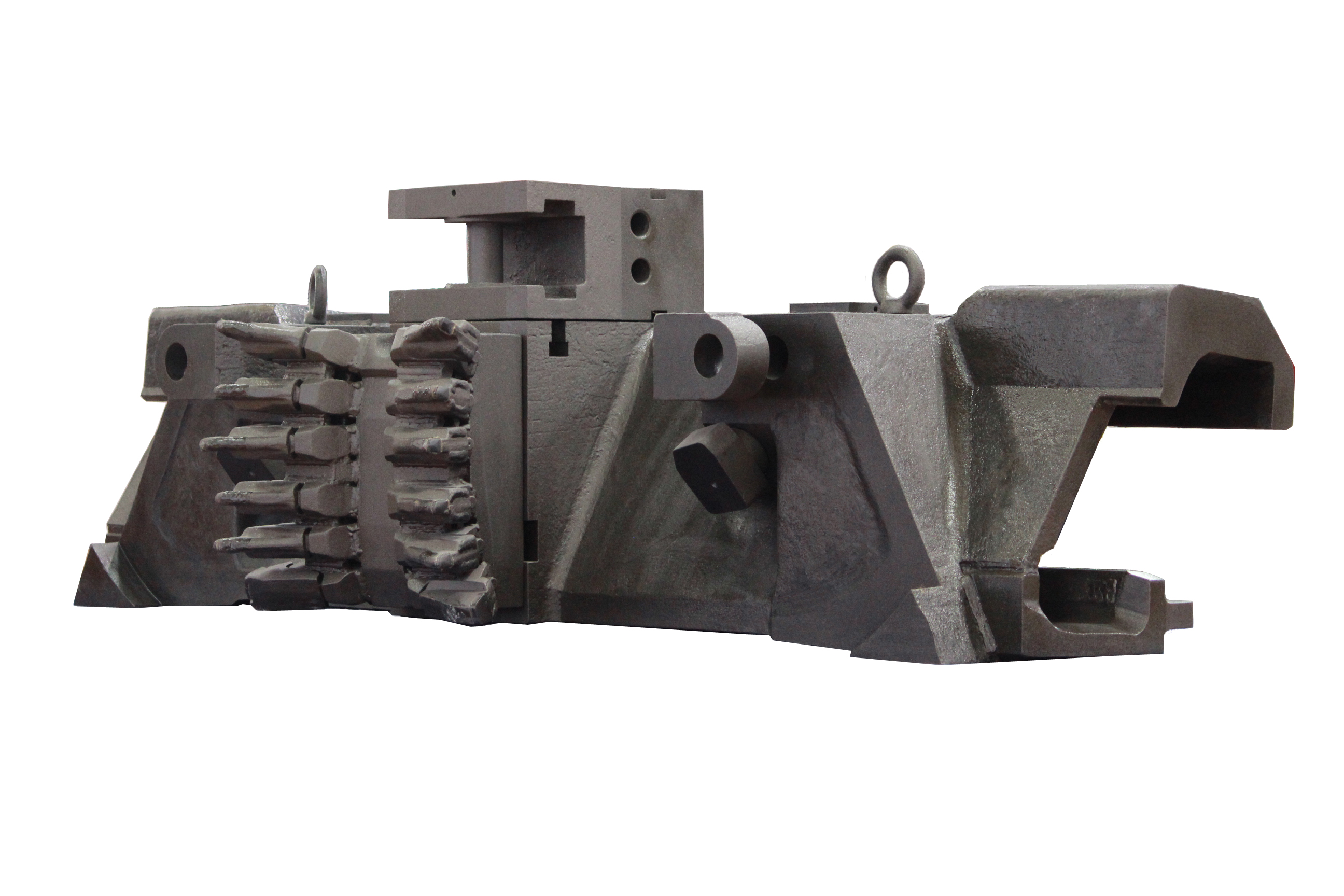
A quick aside: the team behind the linked page manufactures large cast components too—Material: ZG30MnSi; sand casting; unit weight around 1,900 kg; productivity ≈20,000 t/year; ODM/OEM per drawing; origin: RM315, Baihui Building, No.57 Sizhong Road, Qiaoxi District, Shijiazhuang, Hebei, China. That depth in heavy castings tends to show up in tight bells and repeatable wall-thickness—small details that keep a Cast Iron Water Main Pipe project on schedule.
Customization checklist
- Pressure class and joint restraint for HDD or river crossings
- Coating/lining: zinc+bitumen vs epoxy; NSF 61 required?
- Special lengths, beveled spigots, tapping sleeves/flanged specials
- Corrosion plan: soil survey, polywrap, test stations, CP where needed
Case study (condensed)
A Midwest city swapped 1960s gray-iron with 12-in DI PC350. Soil was moderately corrosive; they used zinc + bitumen and polyethylene encasement. Field test at 200 psi held steady (leakage well under AWWA allowance). Residents—surprisingly vocal—reported better pressure and fewer brown-water events after the switchover. To be honest, the crew said restrained push-on joints shaved a day off every 400 m section.
Bottom line: if you need backbone reliability with familiar installation practices, Cast Iron Water Main Pipe (modern DI) remains a safe bet. Just get the corrosion story right and keep your standards tight.
Authoritative references
- AWWA C151/A21.51 – Ductile-Iron Pipe, Centrifugally Cast
- AWWA C104/A21.4 – Cement–Mortar Lining for Ductile-Iron Pipe and Fittings
- ISO 2531 – Ductile iron pipes, fittings, accessories and their joints
- EN 545 – Ductile iron pipes, fittings, accessories for water pipelines
- U.S. EPA – Aging Water Infrastructure and distribution system guidance
-
BAC Heat Exchangers: Efficient, Durable Cooling Solutions for Industry
NewsDec.08,2025
-
Cross Flow Condenser Explained – Insights from Industrial Equipment Experts
NewsDec.08,2025
-
Efficient Heating Coils Heat Exchangers for Industrial Thermal Systems
NewsDec.08,2025
-
Liquid Vapour Heat Exchanger – Reliable Industrial Heat Transfer Solutions | Casiting
NewsDec.08,2025
-
Packaged Plate Heat Exchanger Insights | Industrial Equipment Guide
NewsDec.07,2025
-
Refrigeration Shell And Tube Condenser – Durable Industrial Cooling Solutions by Casiting
NewsDec.07,2025