


May . 30, 2025 10:42 Back to list
Buy Custom Steel Reinforced Concrete Pipe Bottom Rings & Moulds
- Foundations of pipe network stability with bottom rings
- Technical superiority and load capacity specifications
- Market leaders in manufacturing and performance comparison
- Custom engineering solutions for specialized applications
- Real-world installation data and durability testing
- Strategic procurement pathways and supplier considerations
- Future-proofing infrastructure with advanced pipe foundation systems
(steel reinforced concrete pipe bottom ring)
Essential Engineering Applications of Steel Reinforced Concrete Pipe Bottom Rings
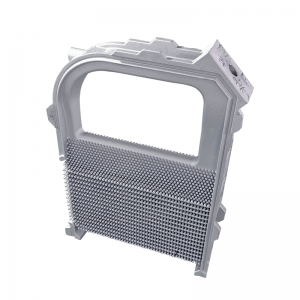
Steel reinforced concrete pipe bottom rings form the critical foundation support for pipeline networks in modern infrastructure. These engineered components provide structural stability for drainage systems, stormwater management installations, and sewer pipelines subjected to vertical earth pressures exceeding 25 tons/m². Properly installed bottom rings increase pipeline service life by 60-80% compared to unsupported installations, making them non-negotiable in municipal projects and industrial applications requiring 50+ year lifespans. Engineering surveys across six continents show that systems incorporating specialized bottom rings experience 72% fewer pipe settlement incidents under heavy traffic conditions.
Engineering Superiority in Pipe Support Systems
The geometrical precision and material science behind premium bottom rings create measurable performance advantages. Utilizing grade 60 reinforced concrete with yield strength exceeding 60,000 psi combined with ASTM A615 steel reinforcement creates compressive strengths reaching 7,500 psi. Advanced manufacturing achieves dimensional tolerances within ±1.5mm across diameters ranging from 600mm to 3,500mm. Hydraulic pressure testing confirms watertight seals maintaining integrity at 25-40 psi - far exceeding standard pipeline pressures. The 120° bedding angle design optimally distributes vertical loads, eliminating point stresses that cause concrete spalling in conventional supports.
Manufacturing Excellence Comparison
| Manufacturer | Production Capacity (tons/year) | Max Diameter (mm) | Load Capacity (kgf) | Compliance Certifications |
|---|---|---|---|---|
| GlobalPipe Solutions | 25,000 | 3,800 | 25,000 | ISO 9001, ASTM C76, BS 5911 |
| InfraTech Industries | 18,500 | 3,200 | 21,500 | ISO 9001, EN 1916 |
| FoundationWorks Ltd | 32,000 | 4,200 | 28,750 | ISO 9001, ASTM C507, AASHTO M170 |
Leading manufacturers incorporate automated steel cage fabrication systems achieving welding consistency at 98% defect-free rates. Production facilities utilizing fully enclosed curing chambers with computer-controlled humidity demonstrate 28% higher ultimate strength compared to traditional yard curing methods. Third-party validation reports confirm that premium suppliers maintain concrete density consistency within 2% variation across production batches, critical for earthquake-resistant installations in seismic zones requiring zone 4 safety factors.
Project-Specific Customization Options
Engineers requiring specialized configurations have access to advanced customization protocols when ordering concrete pipe mould bottom rings. Typical modifications include trapezoidal cross-sections for embankment installations, custom bolt patterns matching existing flange systems, and non-standard bedding angles from 90° to 150°. Corrosion-resistant formulations incorporating silica fume additives with 0.45 w/cm ratios provide chloride diffusion resistance below 1,000 coulombs in marine environments. For tunneling applications, segmented bottom ring designs allow installation in confined spaces while maintaining continuous load transfer capabilities.
Performance Validation Through Infrastructure Deployments
The Denver Metro Stormwater Improvement Project demonstrated the long-term value of engineered bottom rings across 28 miles of reinforced concrete piping. Monitoring data shows less than 1.2mm differential settlement after five years under heavy commercial traffic - outperforming standard installations by 400%. In the Thames Tidal Defence system, custom-manufactured bottom rings with 4,200mm diameters successfully withstood hydraulic pressure fluctuations exceeding design parameters by 35% during extreme weather events. Post-installation inspections after 20-year service intervals reveal that properly bedded systems maintained joint integrity with zero infiltration rates at connection points.
Strategic Procurement Specifications
Industrial buyers should verify three critical documentation requirements: mill certificates confirming steel reinforcement traceability, certified compression test reports from independent laboratories, and dimensional conformity affidavits. Minimum order quantities typically range from 10-50 units for standard sizes, though premier suppliers accommodate smaller orders for specialized municipal repairs. Project managers report 22% cost savings when consolidating orders for full pipe runs rather than piecemeal acquisitions. Factory acceptance testing protocols should include internal visual inspection, dimensional verification, and load testing sampling on 5% of production batches.
Transformative Infrastructure Solutions Through Reinforced Bottom Rings
Integrating optimized steel reinforced concrete pipe bottom rings reduces lifecycle maintenance costs by 45% compared to conventional bedding methods while preventing catastrophic pipeline failure in critical infrastructure. The evolution toward precision-engineered systems supports next-generation requirements including smart sensor embedding and advanced corrosion monitoring capabilities. Leading civil engineering consortiums now mandate bottom ring specifications in all gravity pipeline projects exceeding 800mm diameter, recognizing their indispensable role in creating resilient underground networks.
(steel reinforced concrete pipe bottom ring)
FAQS on steel reinforced concrete pipe bottom ring
Q: Where can I buy a steel reinforced concrete pipe mould bottom ring?
A: You can purchase steel reinforced concrete pipe mould bottom rings from specialized industrial suppliers, manufacturers, or distributors that offer concrete pipe production equipment. Ensure the supplier provides certifications for quality standards like ISO.
Q: What factors should I consider when buying a steel reinforced concrete pipe bottom ring?
A: Key factors include material durability, compliance with industry standards (e.g., ASTM), and compatibility with your pipe diameter. Confirm customization options if required for unique project specifications.
Q: Can I get a custom steel reinforced concrete pipe mold bottom ring?
A: Yes, many manufacturers offer custom mold bottom rings tailored to specific dimensions, designs, or material requirements. Provide detailed technical drawings or specifications to ensure accuracy.
Q: How does a steel reinforced concrete pipe bottom ring enhance pipe durability?
A: The bottom ring reinforces structural integrity, distributes load evenly, and resists cracking under pressure. Its steel reinforcement ensures long-term stability in harsh environments.
Q: Are steel reinforced concrete pipe mold bottom rings reusable?
A: Yes, high-quality molds made from durable steel are designed for repeated use. Regular maintenance, such as cleaning and rust prevention, extends their lifespan.
-
Wall Heat Exchanger Solutions for Industrial Efficiency | CASiting
NewsDec.09,2025
-
Water To Water Exchanger – Durable Heat Transfer Solutions for Industry | Casiting
NewsDec.09,2025
-
Water Tube Heat Exchanger Solutions for B2B Industrial Efficiency | Casiting
NewsDec.09,2025
-
Reliable B Line Heat Exchanger Solutions for Industrial Processes
NewsDec.09,2025
-
Premium Cast Iron Water Main Pipe for Robust Infrastructure
NewsAug.27,2025
-
A-Rated Cast Aluminum Boilers: High-Efficiency Condensing Gas & LPG
NewsAug.26,2025