


Nov . 07, 2025 10:50 Back to list
Cast Iron Water Main Pipe - ISO, Corrosion Resistant
Cast Iron Water Main Pipe: field notes, specs, and what’s changing underground
I’ve walked enough muddy job sites to know the sound a broken main makes. To be honest, you never forget it. Still, the quiet hero of city infrastructure is the Cast Iron Water Main Pipe—or, these days, more precisely, ductile iron with proper linings and coatings. The market is shifting: utilities want leak reduction, pressure stability, and parts that last decades without babysitting. Actually, the best projects I’ve seen pair conservative engineering with realistic installation practices—nothing flashy, just dependable.
Industry trends I’m watching
- Shift to ductile iron per AWWA C151 / EN 545 / ISO 2531—strong, resilient, reliable.
- Corrosion control: zinc–aluminum spray + bitumen topcoat, or PU/epoxy; cement-mortar lining per AWWA C104.
- Push-on gaskets for speed; restrained joints where soils are tricky; rising interest in trenchless tie-ins.
- Data-driven asset management: test pressure logs, GIS traceability, and coating thickness reports.
Typical product specs (practical ranges)
| Parameter | Specification (≈ real-world use may vary) |
| Nominal diameters | DN80–DN1200 (3"–48"), common stock around DN100–DN600 |
| Length | ≈ 6 m (20 ft) per stick; custom lengths by request |
| Material | Ductile iron per ISO 1083 / ASTM A536; centrifugally cast |
| Pressure class | PN10 / PN16 / PN25 or AWWA Class 50–54 |
| Joints | Push‑on (gasketed), mechanical joint, flanged; restrained options |
| Internal lining | Cement‑mortar per AWWA C104; epoxy/ceramic epoxy optional |
| External coatings | Zinc (≥130 g/m²) + bitumen; Zn‑Al + PU topcoat; fusion‑bonded epoxy |
| Factory hydrotest | ≈ 1.5 × PN (e.g., up to 3.75 MPa for PN25); ring & tensile tests logged |
| Service life | 50–100+ years with proper coatings, bedding, and cathodic protection |
How it’s made (short version)
Materials are melted and alloyed; pipes are centrifugally cast in metal molds, then annealed to get that ductility we rely on. After machining the spigots and bells, internal cement lining is spun in; externals get zinc or Zn‑Al plus a topcoat. Hydrostatic testing follows AWWA/EN/ISO requirements, with coating thickness and holiday tests documented. Many customers say the QC paperwork matters as much as the iron—can’t argue with that.
Applications and advantages
- Municipal transmission and distribution mains; fire loops; industrial water and irrigation.
- High burst strength, low deflection; gasketed joints help with seismic and ground movement.
- Predictable hydraulics with smooth mortar lining; low leakage rates when installed per AWWA C600.
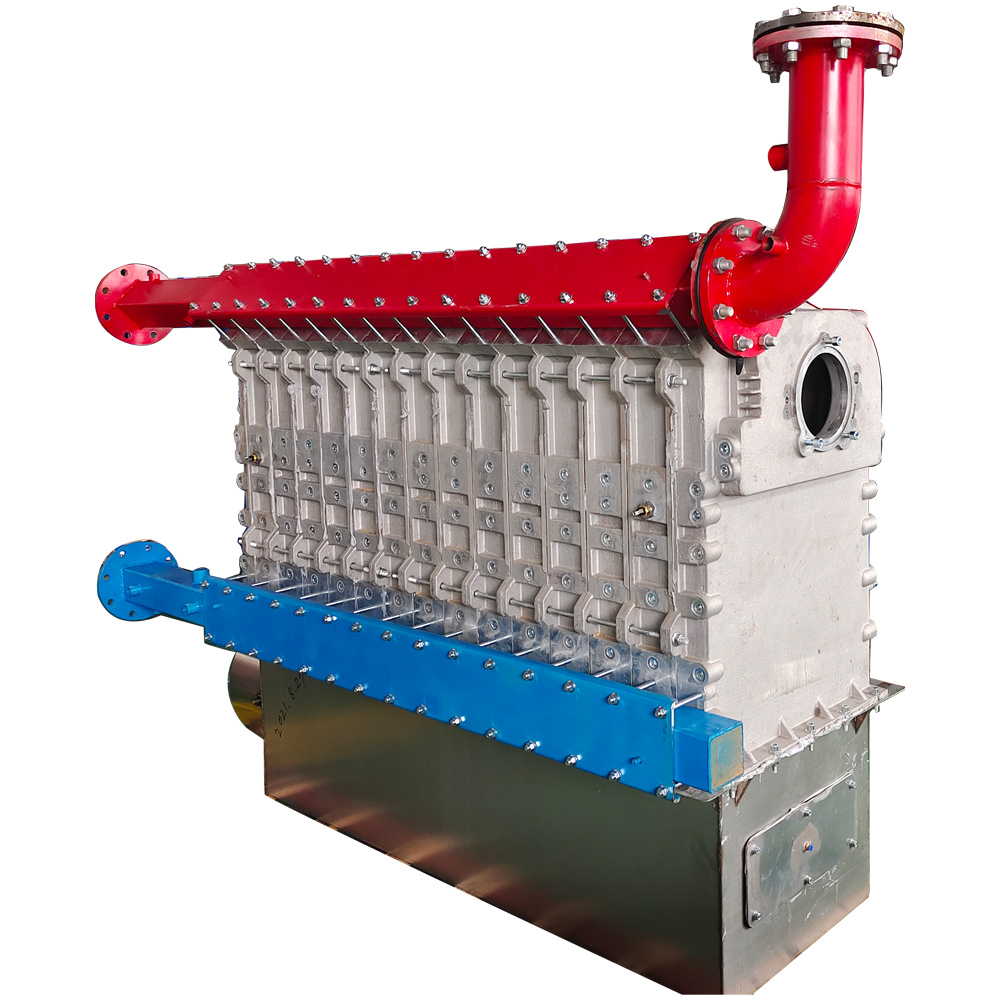
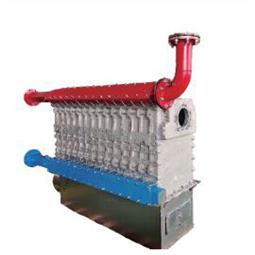
A quick aside: the foundry capabilities behind resilient water pipe often spill into other cast components. Case in point, the fully premixed cast silicon‑aluminum heat exchangers (150–350 kW) many boiler OEMs source—compact, corrosion‑resistant, detachable channels. Different product, same obsession with casting and heat transfer control. That cross‑discipline skill shows up in better Cast Iron Water Main Pipe finishes and QC, in my experience.
Vendor snapshot (real‑world buyers compare these)
| Vendor | Origin | Standards | Customization | Lead time | Certifications |
| Casiting Foundry | RM315, Baihui Bldg, No.57 Sizhong Rd, Qiaoxi, Shijiazhuang, Hebei, China | AWWA C150/C151, C104; EN 545; ISO 2531 | DN, coatings, linings, joint types, branding | ≈ 4–8 weeks after PO (project size dependent) | ISO 9001/14001; potable water approvals by market |
| EU Foundry A | EU | EN 545 / ISO 2531 | Coatings and restrained joints | ≈ 6–10 weeks | CE, ISO 9001; local drinking‑water marks |
| North American Mill B | USA/Canada | AWWA C151 / C104 | Special lengths, flanged spools | ≈ 3–6 weeks (stock DN faster) | NSF/ANSI/CAN 61; ISO 9001 |
Field performance and feedback
One coastal project (DN400, PN16) reported factory hydrotests at 2.4 MPa and on‑site pressure test at 1.5 MPa with zero visible leaks; GIS logs matched heat numbers for traceability. A Midwest utility told me leakage dropped ≈18% after replacing pre‑WWII grey iron with modern ductile. It seems that careful bedding and joint cleanliness mattered as much as the pipe spec—surprisingly, small things win big here.
Standards to cite in your submittal
- AWWA C151 (ductile‑iron pipe), C150 (design), C104 (cement‑mortar lining), C600 (installation).
- EN 545 and ISO 2531 for DN, tolerances, coatings, and tests.
- ISO 1083 (ductile iron grade); potable approvals (e.g., NSF/ANSI/CAN 61, WRAS) where required.
Bottom line: Spec the right class, insist on coating data, and keep joints clean. Do that, and your Cast Iron Water Main Pipe will outlast budgets and election cycles alike.
- AWWA C151—Ductile‑Iron Pipe, Centrifugally Cast, for Water. American Water Works Association: https://www.awwa.org
- EN 545—Ductile iron pipes, fittings, accessories and their joints for water pipelines. CEN/BSI summary: https://www.bsigroup.com
- ISO 2531—Ductile iron pipes, fittings, accessories and their joints for water applications: https://www.iso.org/standard/64568.html
- AWWA C104—Cement–Mortar Lining for Ductile‑Iron Pipe and Fittings: https://www.awwa.org
-
BAC Heat Exchangers: Efficient, Durable Cooling Solutions for Industry
NewsDec.08,2025
-
Cross Flow Condenser Explained – Insights from Industrial Equipment Experts
NewsDec.08,2025
-
Efficient Heating Coils Heat Exchangers for Industrial Thermal Systems
NewsDec.08,2025
-
Liquid Vapour Heat Exchanger – Reliable Industrial Heat Transfer Solutions | Casiting
NewsDec.08,2025
-
Packaged Plate Heat Exchanger Insights | Industrial Equipment Guide
NewsDec.07,2025
-
Refrigeration Shell And Tube Condenser – Durable Industrial Cooling Solutions by Casiting
NewsDec.07,2025